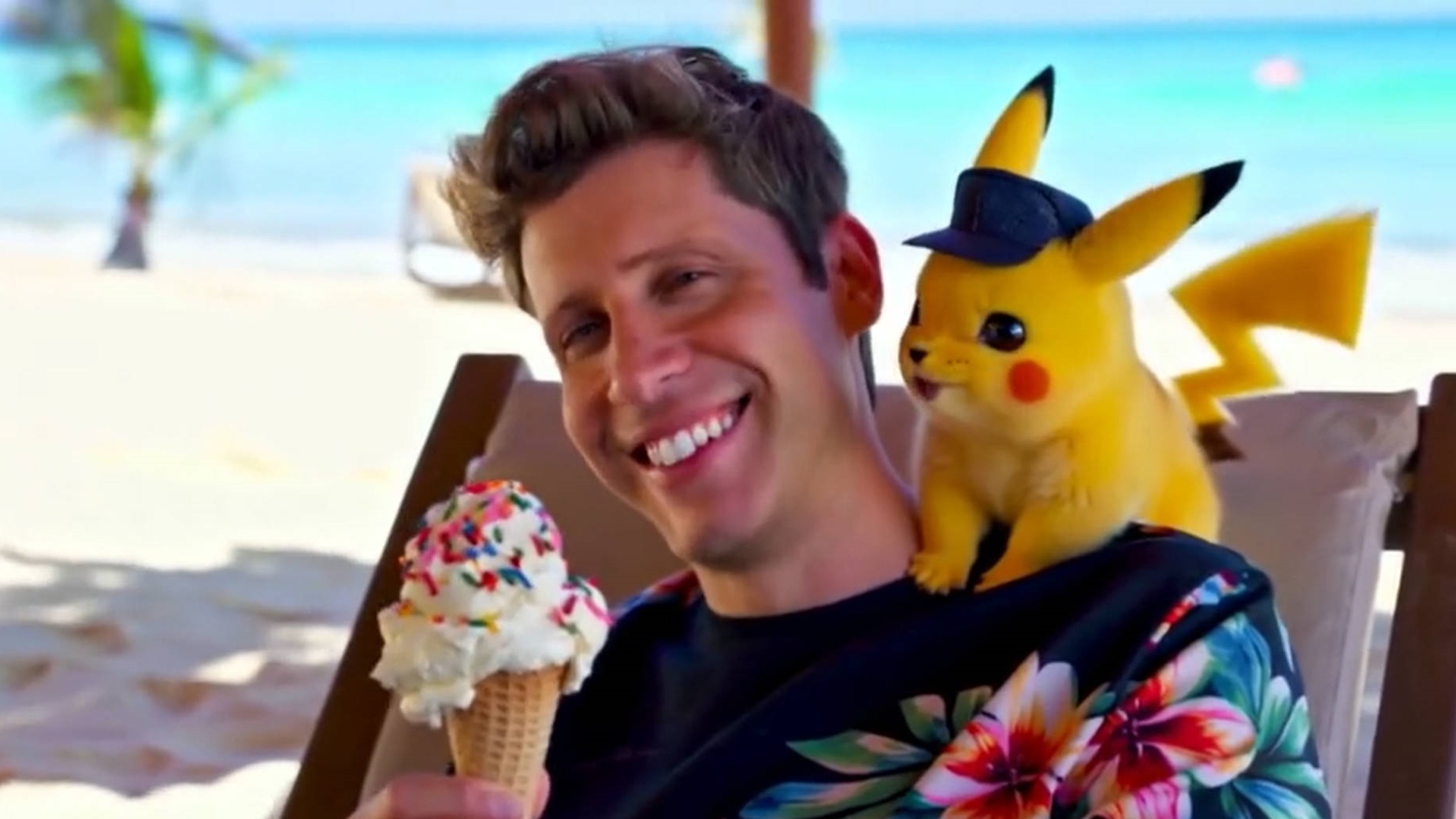
Kling O1 has showed how multimodal video models can bring text, images, and video cues together for practical AI-powered creation. Building on that foundation, the Kling AI Team introduced UniVideo, which takes the unified video idea even further with stronger multimodal understanding, smarter reasoning, and much more accurate use of visual references. UniVideo is an end-to-end unified AI model capable of video understanding, video generation, and video editing within a single architecture.
Why Does UniVideo Matter?
Traditional pipelines often rely on multiple models that each perform one task, one for text interpretation, one for reference identity extraction, and another for frame generation. Such fragmented systems frequently produce inconsistent visuals and fail to maintain a coherent identity across a sequence.
UniVideo solves this by treating all three tasks, understanding, generating, and editing, as components of the same multimodal reasoning process. UniVideo doesn’t just read a prompt or glance at a reference image, it truly understands them, interpreting scene logic, identity details, and stylistic cues with a level of precision that feels like the next step in intelligent video generation.
How Does UniVideo Work?
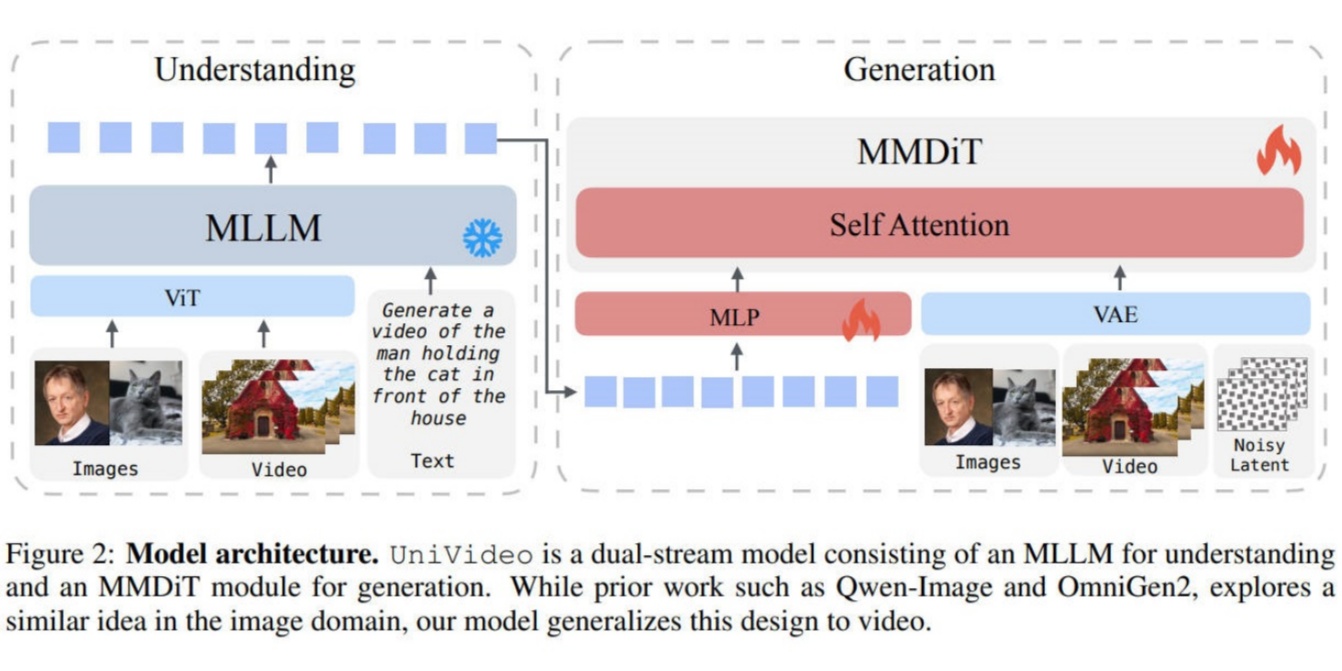
At the core of UniVideo lies a dual-stream architecture combining two synergistic components:
A Multimodal Large Language Model (MLLM) for semantic understanding
A Multimodal Diffusion Transformer (MMDiT) for frame synthesis
This combination enables UniVideo to perform both high-level reasoning and high-quality video generation cohesively.
MLLM: How Does UniVideo Understand Prompts and References More Deeply?
The MLLM doesn’t simply parse text; it interprets relationships, context, and logic behind a prompt.
More importantly, UniVideo exhibits strong visual reference understanding, accurately identifying characters, styles, poses, spatial layouts, and aesthetic elements from images. This is a major improvement over many earlier models that either misinterpret references or lose identity fidelity during generation.
The result is a model that understands not only the appearance of a reference but also how that reference should behave across a full video sequence.
MMDiT: How Does UniVideo Generate Stable and Coherent Video?
Once the MLLM interprets the input, the Multimodal Diffusion Transformer generates video frames with:
High temporal consistency
Stable appearance and lighting
Coherent motion and transitions
Strong structural alignment with the prompt
MMDiT reduces the common “stitched-together” artifacts found in older systems, making outputs feel more realistic and unified.
What Inputs Can UniVideo Understand and Use?
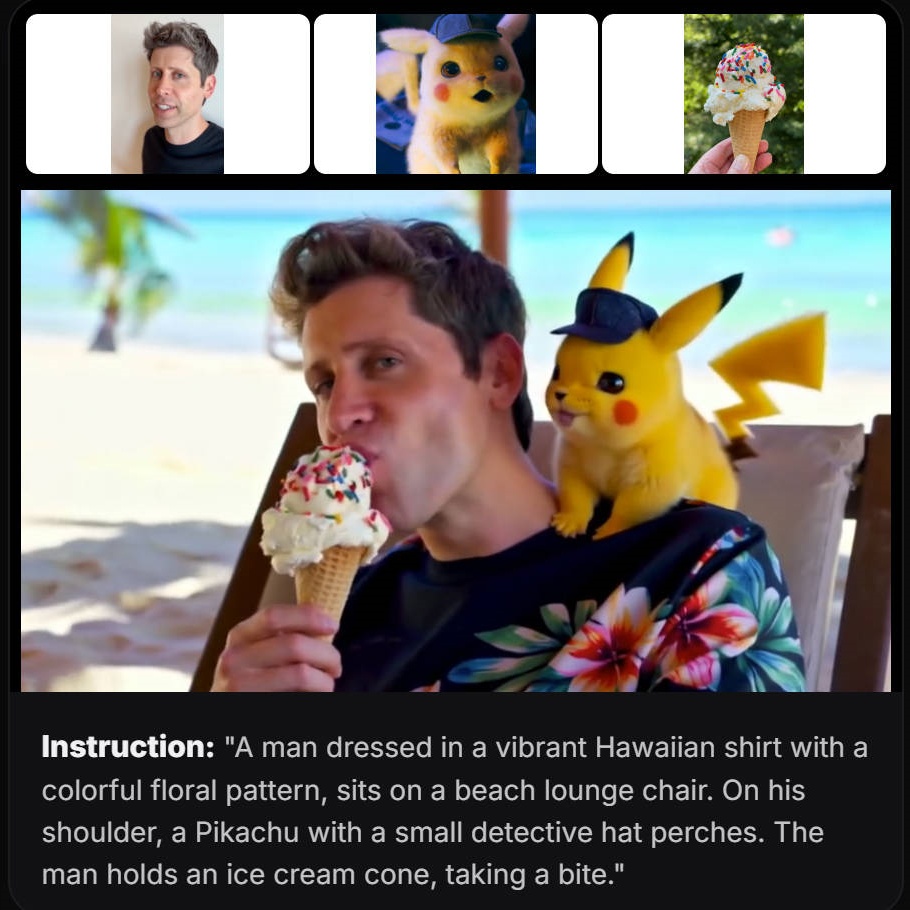
UniVideo’s strength lies in its broad multimodal input capabilities:
Text prompts describing scenes, motion, or style
Reference images that define identity, composition, or thematic tone
Sketches or layout diagrams offering spatial guidance
Short video clips for editing, continuation, or transformation
Stylistic images for visual appearance control
Because UniVideo processes these inputs within one unified reasoning space, it handles reference-driven tasks with exceptional accuracy, preserving identity, style, and coherence across frames.
What Can UniVideo Do?
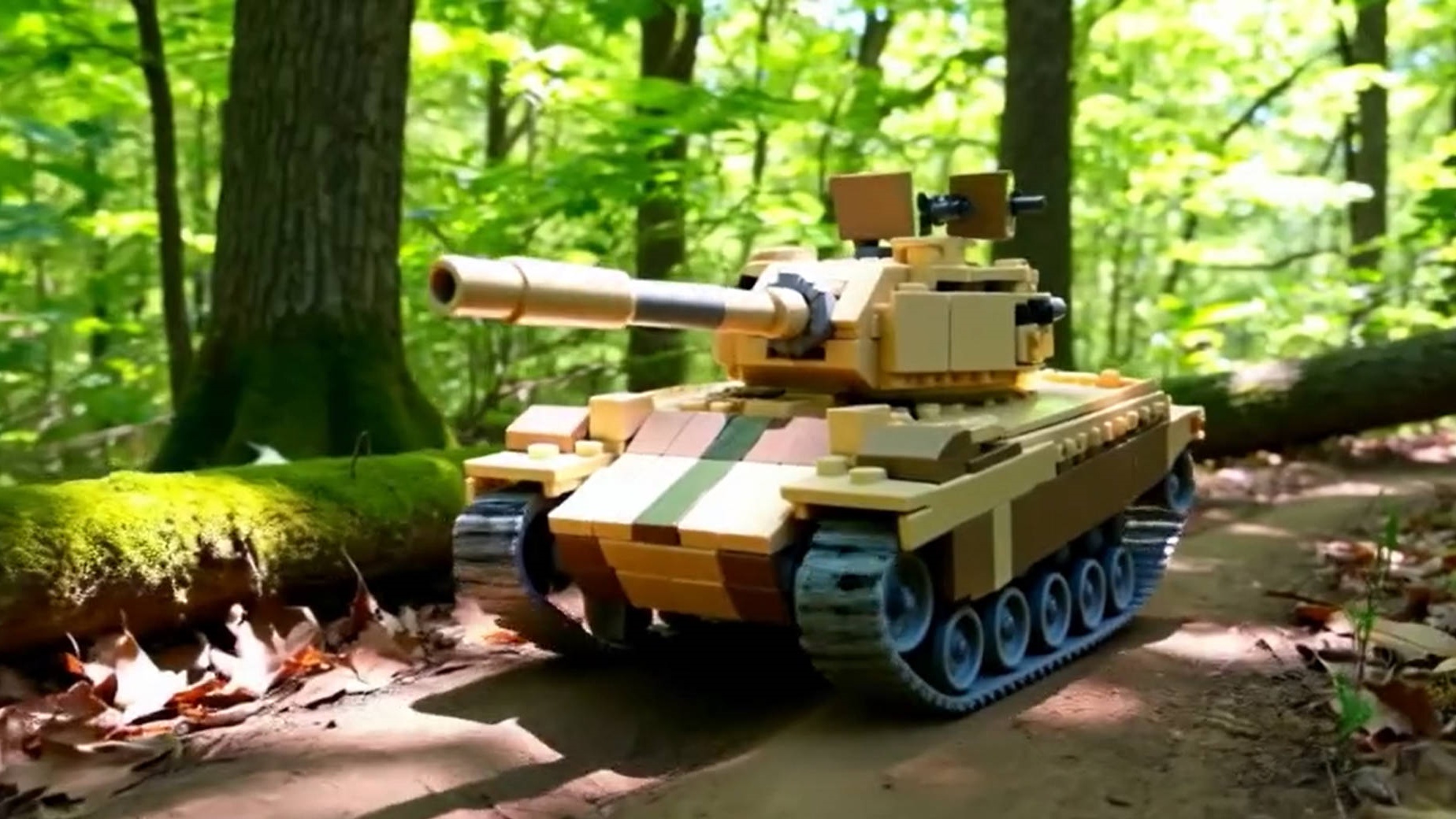
UniVideo supports a range of high-level video tasks without relying on external toolchains.
Text-to-Video and Image-to-Video Creation
UniVideo can construct entire scenes from natural language or animate a static image into a smooth, consistent sequence. This is ideal for concept exploration, narrative visualization, and early creative ideation.
Reference-Driven Video Generation
UniVideo excels at interpreting and applying multiple reference images:
Maintaining character identity
Preserving artistic style
Producing visually coherent sequences
Ensuring consistent motion and camera perspectives
This makes it particularly valuable for branded content, character-driven storytelling, and continuity-dependent video tasks.
In-Content Video Editing
UniVideo can modify existing clips by understanding how to blend new semantic instructions with original content.
It supports:
Background replacement
Object addition or removal
Color, texture, or material changes
Style transform
Layout-guided rewrites
And because all tasks occur within one architecture, editing preserves the same visual tone and stability.
Why Are Creators and Researchers Interested in UniVideo?
UniVideo addresses several persistent challenges in video AI.
1. Accurate Interpretation of Visual References
Many models can “see” a reference image, but few can truly interpret it.
UniVideo’s multimodal reasoning allows it to understand identity, composition, and stylistic cues with remarkable precision.
2. Strong Consistency Across Frames
Its diffusion transformer maintains coherence in appearance, motion, and lighting, solving a major problem in earlier models that produced fragmented or drifting visuals.
3. Unified Generation + Editing Architecture
By removing the need for external editing tools, UniVideo reduces workflow fragmentation and maintains stylistic uniformity.
4. Broad Creative and Research Potential
Its ability to reason across text, images, and video inputs makes it suitable for both practical content creation and advanced research into video AI.
What Are the Potential Applications of UniVideo?
As a unified model with deep multimodal understanding, UniVideo supports a wide range of creative and technical applications.
1. Marketing and social media content
UniVideo can create consistent, brand-aligned visuals using text prompts and reference images, making it ideal for dynamic ads, short-form clips, and product showcases across various platforms.
2. Pre-visualization for film and animation
Its strong temporal consistency and identity preservation allow directors and animators to prototype scenes, test story ideas, and visualize camera movements quickly before full production.
3. Educational or explainer video generation
UniVideo interprets structured prompts and visual cues to produce clear, coherent clips suitable for tutorials, training material, and instructional storytelling.
4. Concept art and rapid prototyping
Artists can use reference images or layout sketches to guide early visual exploration, enabling fast iteration on style, composition, and scene concepts.
5. Digital characters and brand identity videos
With precise reference handling, UniVideo maintains consistent character identity and stylistic continuity, making it suitable for mascots, brand personas, and repeated character-driven content.
6. Research on multimodal understanding and diffusion models
UniVideo’s unified architecture makes it a strong foundation for studying multimodal reasoning, long-range temporal modeling, and diffusion-based video synthesis.
Together, these capabilities allow UniVideo to support both creative workflows and advanced research exploration within a single, integrated video AI framework.
UniVideo represents a meaningful advancement in unified video modeling, combining understanding, generation, and editing in a single AI system with deeper semantic and visual reasoning.
Whether you’re a researcher studying multimodal AI or a creator curious about emerging video technologies, UniVideo offers a compelling look at where video AI is heading.
Reference: UniVideo technical paper